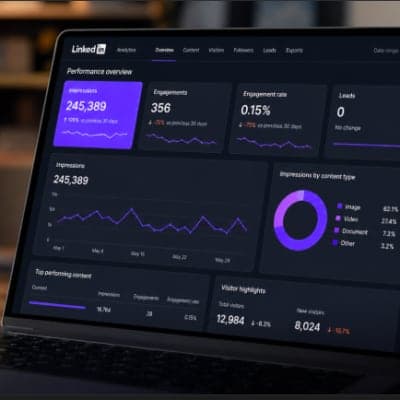
A coach posts on LinkedIn every single day. Has been doing it for 18 months. Has built the consistency that every guru tells you is the key. Has 4000 followers. Posts get 50 to 200 likes. Posts get comments. The coach replies to every comment.
And the coach has not booked a single client from LinkedIn in 6 months.
This is not a hypothetical. This is the experience of roughly 70 percent of coaches who post daily on LinkedIn in 2026.
The advice everyone gives is correct in form and wrong in execution. Posting daily does work. It just does not work the way most coaches are doing it. Here is why.
Why does daily posting fail to generate coaching clients
The LinkedIn algorithm in 2026 rewards engagement, not insight. A post about a celebrity gossip topic will get 10x the reach of a deep coaching insight, regardless of which one is more valuable to your audience.
Most coaches misread this. They see their friends post about random topics getting massive reach and assume they need to chase whatever the algorithm is rewarding that week. So they post about productivity tips, motivational quotes, generic business advice. Their reach goes up. Their lead conversion goes to zero.
The reason is simple. Reach without alignment to your offer is noise. The 200 people who liked your motivational post are not your ideal clients. They are random LinkedIn users hitting like as they scroll. Your post served their dopamine. Your post did not serve your business.
Coaching clients come from a specific kind of post. Posts that name a problem your ideal client is currently experiencing, articulate why most fixes do not work, and position your method as the path forward. These posts get less reach than motivational posts. They convert 100x better.
What kind of LinkedIn posts actually generate coaching clients in 2026
After analyzing thousands of coaching client conversion posts in 2025 and 2026, the pattern is clear. Posts that convert have 4 specific elements.
Element 1. Problem specificity
The post names a specific problem your ideal client is having right now. Not a general problem. A specific one.
Generic. "Most founders struggle with confidence."
Specific. "If you are a Series A founder going into your board meeting next week, here is why you are about to over-promise on Q3 numbers."
The specific version converts because it sounds like the post was written for one person. The person reading it feels seen. Generic posts get likes. Specific posts get DMs.
Element 2. Why the standard fix fails
After naming the problem, the post explains why the obvious solution does not work. This is where coaches add unique value because they have seen the failure pattern hundreds of times in their practice.
This element separates expert coaches from generic content creators. Generic creators tell you what to do. Coaches tell you why what you have already tried did not work and what to do instead.
Element 3. The actual fix or framework
The post then offers the coach's actual approach. Not the full system (you save that for paying clients) but enough that the reader gets a real shift in thinking from reading the post.
Most coaches are afraid of giving away their best ideas in posts. This is backwards. The coaches who give away their best frameworks for free are the ones who get hired. Because the reader thinks. If this is what they share for free, imagine what they teach in the program.
Element 4. Soft CTA to a conversation
The post ends not with a hard pitch but with an invitation to a conversation. DM if this is you. Comment if you want me to send you the framework. Reply if you want my full diagnostic.
Hard CTAs in posts feel needy. Soft CTAs in posts feel generous. The soft CTA generates DMs. The DMs become sales conversations. The sales conversations become clients.
What is the daily posting trap that traps most solopreneur coaches
Most coaches post daily because someone told them to post daily. They do not have a content strategy. They have a content treadmill.
The treadmill works like this. Coach wakes up. Realizes they have not posted. Panics for 30 minutes. Writes a generic post about whatever is on their mind. Hits publish. Feels relieved.
Multiply this by 365 days. The result is a feed full of generic posts that get likes but never lead to clients.
The fix is not to post less. The fix is to make every post intentional. Every post should map to a specific stage of the buyer journey. Every post should be designed to either attract a new ideal client or move an existing audience member closer to a sales conversation.
This is impossible for most solopreneur coaches to do manually because it requires daily strategic thinking on top of the actual writing work. It is not impossible with the right system.
How are AI agents changing how coaches generate leads on LinkedIn in 2026
In 2026, AI agents have changed the daily posting equation completely.
The traditional path. Coach manually writes one post per day. 30 minutes per post minimum. 15 hours per month on writing alone. No strategic alignment to offer.
The 2026 AI agent path. Coach reviews a weekly content plan generated by an AI strategist. AI creator writes drafts in the coach's voice. AI publisher posts on optimal times. AI engagement agent replies to comments and routes high-value DMs to the coach. AI analyst reports on which posts converted to actual leads, not just likes.
Total time for the coach. 30 minutes per week, not 30 minutes per day. Lead conversion rate. 5 to 10x higher because every post is strategically designed for conversion, not just engagement.
This is not a future capability. This is what coaches who broke through their lead generation problem in the last 12 months are using.
Frequently asked questions about LinkedIn lead generation for coaches
How many posts per week should a coach post on LinkedIn in 2026
3 to 5 high-quality posts per week outperform 7 generic posts per week. Quality and strategic alignment matter more than frequency past a certain threshold.
Why do my LinkedIn posts get likes but no DMs
Your posts are designed for likes (general appeal, broad relatability) instead of DMs (specific problem, soft CTA to conversation). Restructure with the 4 elements in this article.
How do I write LinkedIn posts in my own voice as a coach
Either invest 6 to 12 months in studying high-converting posts and adapting them to your style, or use an AI agent platform that learns your voice from your past content. Both work. The AI path is 10x faster.
Should coaches use LinkedIn ads for lead generation
Only after organic content is converting consistently. LinkedIn ads amplify whatever your organic content is doing. If your organic content is not generating DMs, ads will not fix that.
What is the best time to post on LinkedIn as a coach in 2026
Tuesday through Thursday, 8 AM to 10 AM in your audience's timezone. For coaches with US-based audiences in India, this means 6 PM to 8 PM IST.
How long should a LinkedIn post be for coaching client conversion
Between 800 and 1500 characters for posts. Long enough to develop a real argument, short enough to be readable on mobile. Avoid posts under 500 characters (read as low effort) and over 2500 characters (read as essay, gets skimmed).
Why do my coach posts get fewer impressions than other coaches
Either the hook is weak (first 2 lines do not stop the scroll) or the topic is too generic for the algorithm to push to your network. Specific problems for specific audiences outperform broad insights.
How do I turn LinkedIn comments into coaching clients
Move the conversation to DMs within 24 hours. Comments are public and shallow. DMs are private and deep. Sales conversations happen in DMs, not in comment threads.
Can a coach generate leads from LinkedIn without daily posting
Yes, if every post is strategic and conversion-designed. Some coaches generate 5 to 10 qualified leads per week from posting 2 to 3 times per week with the right structure.
What is the biggest mistake coaches make on LinkedIn in 2026
Treating LinkedIn as a broadcast channel instead of a conversation channel. The coaches who win on LinkedIn use posts to start conversations, not to perform expertise.
Conclusion
Posting daily on LinkedIn is not the path to coaching clients. Posting strategically is.
The 4 elements that turn posts into clients. Problem specificity. Why the standard fix fails. Your actual fix or framework. Soft CTA to conversation.
In 2026, building this kind of strategic posting consistency at scale is no longer manual work for solopreneur coaches. AI agents handle the strategic planning, voice-matched writing, and engagement routing that used to take 15 hours per month.
PropelusAI is launching Soul on September 8, 2026. It is built specifically for solopreneur coaches who want to generate qualified coaching leads from LinkedIn without spending their lives on the platform. 5 autonomous agents plan, write, post, engage, and analyze every piece of content for client conversion.
The first 100 founding members lock in lifetime pricing of 49 USD per month, half of the launch price.